Illert Lab - Personalized Oncology
Research focus
The Illert Lab aims to identify and validate novel molecular targets and predictive biomarkers and translate these findings into clinically relevant strategies for precision oncology.
Our research focuses on understanding the molecular and cellular mechanisms that drive tumor development, therapy resistance and immune escape, with the goal of identifying therapeutically exploitable vulnerabilities and improving individualized cancer treatment.
Focuses
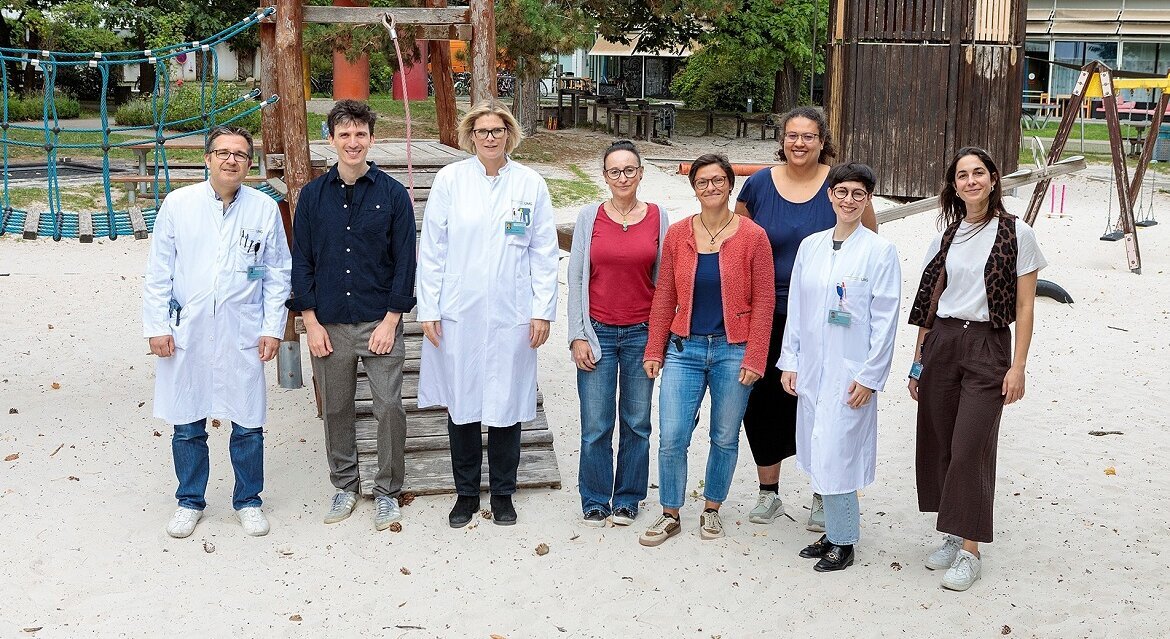
Our research encompasses hematological and non-hematological malignancies and is centered around three closely interconnected areas: tumor biology and therapeutic vulnerabilities, T-cell lymphomas and the tumor microenvironment, and precision oncology.
In tumor biology and therapeutic vulnerabilities, we investigate oncogenic signaling pathways and the functional role of oncogenic tyrosine kinases, as well as the interplay between DNA damage response, cellular signaling and the ubiquitin machinery. We aim to identify molecular dependencies that can be exploited for novel targeted therapeutic approaches.
A second major focus is the tumor microenvironment and tumor–immune interactions, particularly in T-cell malignancies. We investigate the cellular composition, spatial organization and functional state of tumor and immune cell populations to better understand mechanisms of immune escape and treatment response and to identify biomarkers for patient stratification and therapy prediction. To address these questions, we combine genetically defined cellular and mouse models and primary patient-derived material with state-of-the-art multi-OMIC and high-dimensional technologies, including single-cell approaches, proteomics, high-parameter spectral flow cytometry and spatial tissue imaging. Candidate targets and molecular signatures are subsequently validated in functional and preclinical models to evaluate their therapeutic relevance.
A central aspect of our work is the close integration of basic and clinical research through a bench-to-bedside-and-back approach. Experimental discoveries are translated toward clinical application, while molecular and clinical observations from patients generate new hypotheses for mechanistic investigation. The Molecular Tumor Board (MTB) represents a key interface for this translational research, connecting comprehensive molecular profiling with individualized treatment strategies. Our clinical research further addresses the patient-centered implementation of precision oncology, biomarker development, health-services research and the translation of molecular findings into investigator-initiated and early-phase clinical trials.
Our overarching goal is to bridge molecular cancer biology, tumor immunology and precision oncology to develop more effective and individualized treatment strategies for patients with cancer.
Current Research Funding
- European Union: EU HORIZON 2020 ETN-Network FANTOM Doctoral Network (https://fantom-project.eu/research-student-9/)
- Deutsche Krebshilfe - Mildred-Scheel-Professorship
- BMFTR: Nationale Dekade gegen Krebs (https://www.gesundheitsforschung-bmftr.de/de/mtb-alliance-ausbau-und-starkung-der-translationalen-molekularen-onkologie-durch-17652.php)
- DFG: UbiQancer CRC/ TRR 387 (https://ubiqancer.de/)
Key Publications
Key Publications
Illert AL, Stenzinger A, Bitzer M, Horak P, Gaidzik VI, Möller Y, Beha J, Öner Ö, Schmitt F, Laßmann S, Ossowski S, Schaaf CP, Hallek M, Brümmendorf TH, Albers P, Fehm T, Brossart P, Glimm H, Schadendorf D, Bleckmann A, Brandts CH, Esposito I, Mack E, Peters C, Bokemeyer C, Fröhling S, Kindler T, Algül H, Heinemann V, Döhner H, Bargou R, Ellenrieder V, Hillemanns P, Lordick F, Hochhaus A, Beckmann MW, Pukrop T, Trepel M, Sundmacher L, Wesselmann S, Nettekoven G, Kohlhuber F, Heinze O, Budczies J, Werner M, Nikolaou K, Beer AJ, Tabatabai G, Weichert W, Keilholz U, Boerries M, Kohlbacher O, Duyster J, Thimme R, Seufferlein T, Schirmacher P, Malek NP. (2023). The German Network for Personalized Medicine to enhance patient care and translational research.Nat Med. 29(6):1298-1301.
Poggio T, Gräßel L, Andrieux G, Gómez Martínez A, Stock K, Kršić M, Gonzalez-Menendez I, Kreutmair S, Reis Orcinha C, Russ M, Yacob S, Miething C, Bonofiglio F, Montes-Mojarro IA, Köhler N, Follo M, Pfeifer D, Fend F, Quintanilla-Martinez L, Chiarle R, Voena C, Jung J, Zeiser R, Turner SD, Boerries M, Duyster J, Illert AL. (2026). CD4+ T cells orchestrate the immune response to ALK-positive T-cell lymphoma.Blood. ISSN 0006-4971, doi.org/10.1182/blood.2026033240.
Kreutmair S, Erlacher M, Andrieux G, Istvanffy R, Mueller-Rudorf A, Zwick M, Rückert T, Pantic M, Poggio T, Shoumariyeh K, Mueller TA, Kawaguchi H, Follo M, Klingeberg C, Wlodarski M, Baumann I, Pfeifer D, Kulinski M, Rudelius M, Lemeer S, Kuster B, Dierks C, Peschel C, Cabezas-Wallscheid N, Duque-Afonso J, Zeiser R, Cleary ML, Schindler D, Schmitt-Graeff A, Boerries M, Niemeyer CM, Oostendorp RA, Duyster J, Illert AL. (2020) Loss of the Fanconi anemia-associated protein NIPA causes bone marrow failure.J Clin Invest.130(6):2827-2844.
Kreutmair S, Klingeberg C, Poggio T, Andrieux G, Keller A, Miething C, Follo M, Pfeifer D, Shoumariyeh K, Lengerke C, Gonzalez-Menendez I, Fend F, Zeiser R, Turner SD, Quintanilla-Martinez L, Boerries M, Duyster J, Illert AL. (2020). Existence of reprogrammed lymphoma stem cells in a murine ALCL-like model.Leukemia. 34(12):3242-3255.
Rudorf A, Müller TA, Klingeberg C, Kreutmair S, Poggio T, Gorantla SP, Rückert T, Schmitt-Graeff A, Gengenbacher A, Paschka P, Baldus C, Zeiser R, Vassiliou GS, Bradley A, Duyster J, Illert AL. (2019). NPM1c alters FLT3-D835Y localization and signaling in acute myeloid leukemia.Blood. 134(4):383-388.
Team
Kontaktinformationen
- E-Mail-Adresse: haematologie-onkologie.direktion(at)med.uni-goettingen.de

Kontaktinformationen
- E-Mail-Adresse: linda.graessel(at)med.uni-goettingen.de
Kontaktinformationen
- E-Mail-Adresse: anamaria.gomezmartinez(at)med.uni-goettingen.de
News
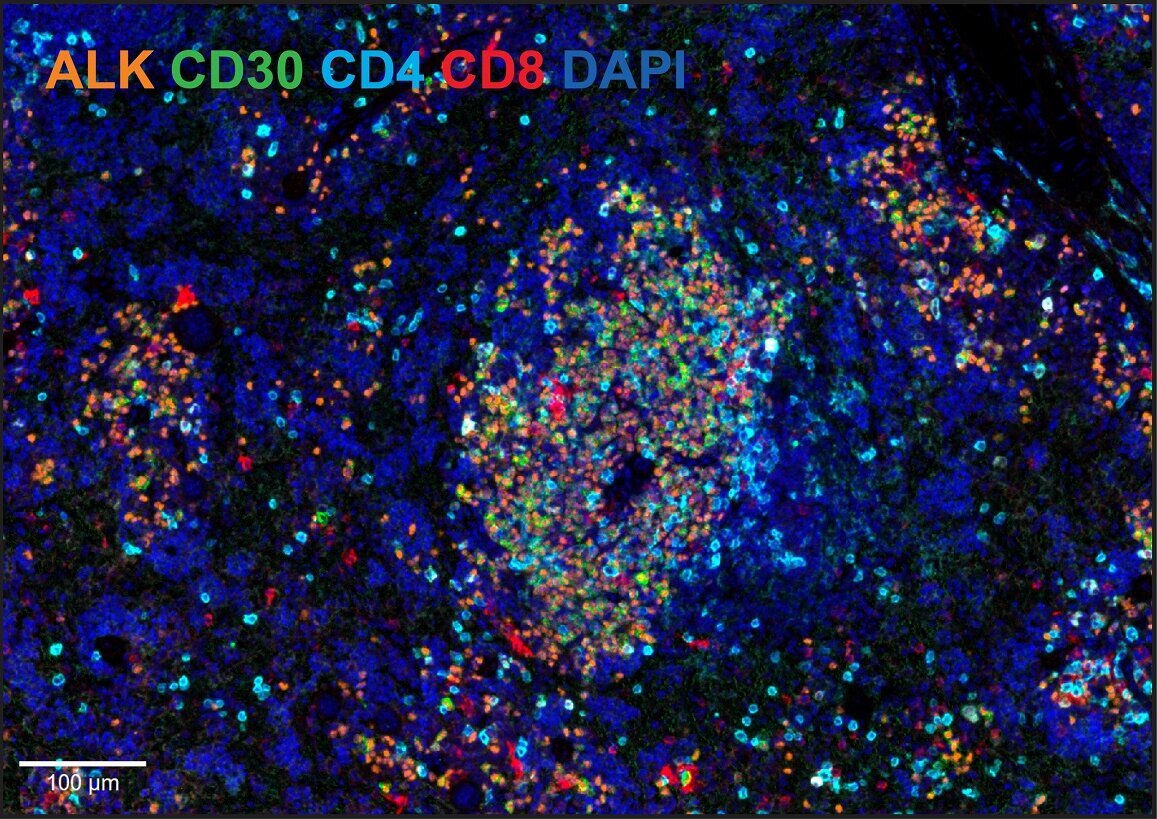
September 2026: Teresa’s and Linda’s paper on how “CD4+ T cells orchestrate the immune response to ALK-positive T-cell lymphoma” was accepted for publication in Blood.
Congratulations!
January 2026: Nadia and Richard joined the Illert lab as PostDocs. Welcome!
January 2026: Salome was accepted into the UMG Clinician Scientist Kolleg (https://www.umg.eu/forschung/forschungsmanagement-foma/forschungsaktivitaeten-infrastrukturen/fakultaetsinterne-foerderung/forschungskollegs/umg-clinician-scientist-kolleg/kollegiaten/) with her project on the NIPA/p53 axis. Congratulations!
December 2025: Alexa received a NEXT clinician scientist stipend for her project on ALK-driven lung cancer. Congratulations!
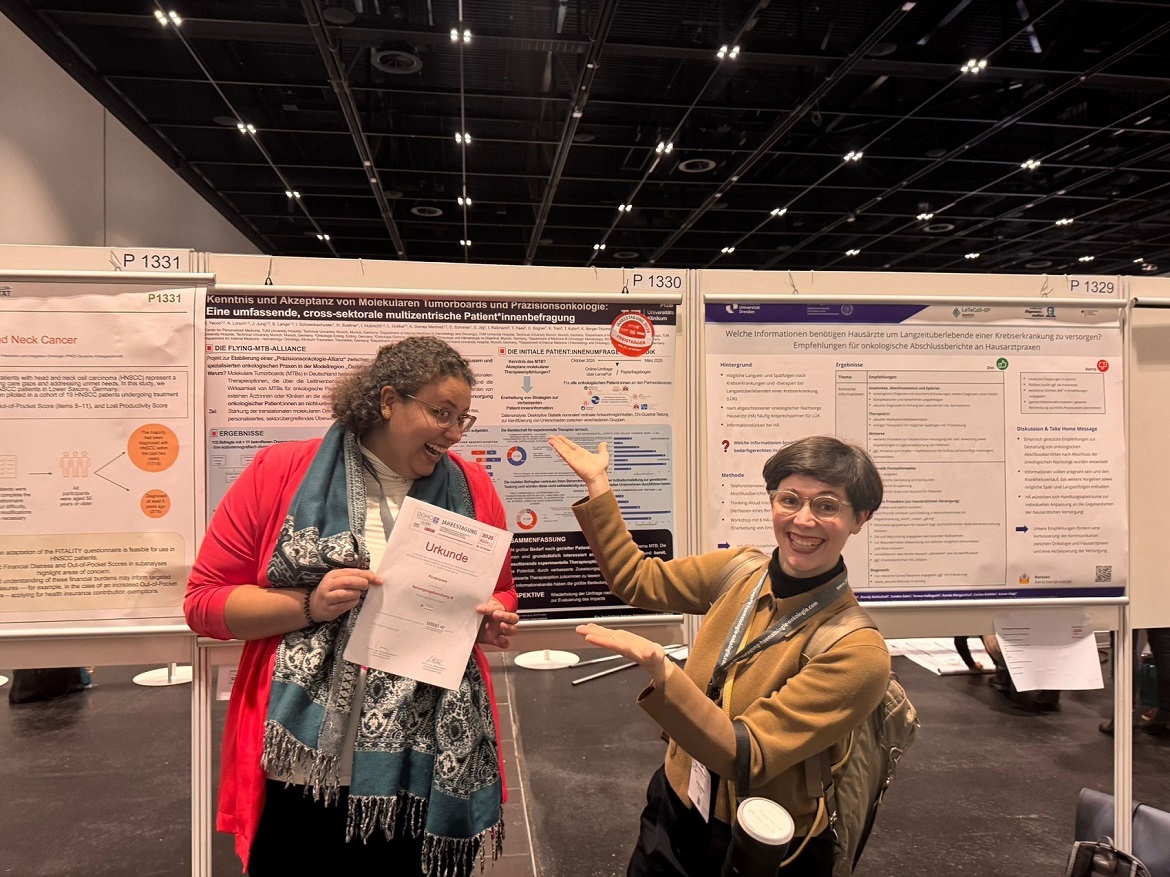
October 2025: Salome was awarded the best poster prize in the respective category at the DGHO annual conference for her report of a patient survey regarding awareness and acceptance of molecular tumour boards and precision oncology.
Congratulations!